Monday, October 31, 2011

Triangulating Love

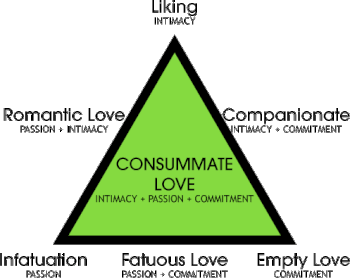
Triangulating Love breaks down relationships for us to better understand them and their structure. Sternberg describes one triangle as having three components: Intimacy, Passion and Decision/Commitment. Intimacy has to do with the closeness that the two people in the relationship have for one another. Passion has to do with physical expression such as sex. Decision and Commitment has to do with short and long-term decisions and choices. This has to do with keeping the person near us and doing whatever it takes to keep them in our lives because we now admit that we love them.
                  He then breaks down the three components even furthur into the "kinds of love" as different combinations. Many people could relate to "Infatuated Love". I say this because a lot of people say they have experienced "love at first sight" which is exactly what infatuated love is. However we all hope for "Consummate Love" because it has all three components. It can be difficult to attain but once we have acheived it, it can be the greatest feeling in the world.

The Posession

I can relate to this reading 100%. In this passage we learn about a woman that is dealing with trying to accept the fact that her ex has moved on to anohter. I feel that other than myself many people can relate to this reading because we have or will have all been through a tough breakup at one time or another. When we find out that our exes have moved on to another person we sit and wonder and begin to ask ourselves "what is wrong with me?" "what did I do wrong?" "Why does he/she love him/her more than me?". This is the same thing the woman deals with in the reading. Whether we are the "dumper" or the "dumpee" such actions take over us. At first we feel that leaving our partner is whats best for us. But after we see that they are happy we feel regret and guilty and wonder why it is they are so happy. We then become consumed with the want for the ex to return to our lives and we look for answers and sometimes closure which may never really heal the wound. We also begin to wonder why we arent as happy as they are and why are we being punished and they arent. Reading this really made me tear up because it is something I have been through and it is not a good feeling at all. But, time heals all wounds and in the end we become stronger people and can evetually move on with our lives.

Monday, October 17, 2011

Davis: Chapter 3

In chapter three Davis once again elaborates on the aspect of Monomania. He mentions many people and stories about them in order to back up his belief and position. He mostly speaks about the founder of Eugenics, Francis Galton. He wrote memiors in which we find out that he was obsessed with putting the events that occured in chronological order. Even though Davis mentions that this form of obsession of hereditary, still it took a big part in Galtons life. Ironically, Davis sort of praises him for his obsessive thoughts because he says without it, Galton would not be the scientist he is known as today.

After reading the chapter and especially the section on Galton I was hit with the reality that OCD is not as bad as many make it seem. For Galton, it benefited him and his specialty. So OCD isnt completely unbearable according to this chapter. Sometimes great things can come of you obsessing over making things perfect or doing your work in a certain way or order. I learned that people deal with OCD is different ways and sometimes it may lead to greatness and in other ways it can become a big burden on ones life.

Monday, October 10, 2011

Chapter 2: Davis.....Monomania or Obsession?

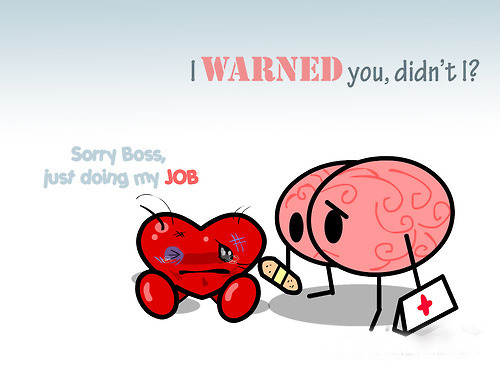
DOES THIS PICTURE DEFINE MONOMANIA OR OBSESSION?
In this chapter we learn more about how the term obsession came about. The chapter states that before we came up with the term "Obsession" we used the term "Monomania" as a way to title such a disorder. Monomania is the preoccupation of one particular thought or idea that one finds to be irresistible. Monomania, being the same as obsession, showed that even though people knew that what they were doing was either wrong or inappropriate they were unable to fight it off and stop it completely. It is also said that Monomania was seen as a lifestyle. I found this to be a little disturbing because I interpreted it as people just trying to ignore the disorder and not try to help people further diagnose it or see the bigger picture. I also feel that there wasn’t necessarily a change in the definition just a change in the term from Monomania to Obsession. When broken down they are pretty much the same disorders. This shows how the world evolves and adapts to its surroundings. Things may change but I feel like they always change for the better. For instance, we now use the term obsession instead of monomania because as research for it continued the term obsession seemed to better fit the concept. As we continue to do our research we learn more about how to treat it and help others suffering with it.